
Career development
Plan a certification week around evidence of progress
Give each study block a deliverable and use the final block to decide what deserves another week.
Accumentum® PRAXIS · Edition of · 6 min read
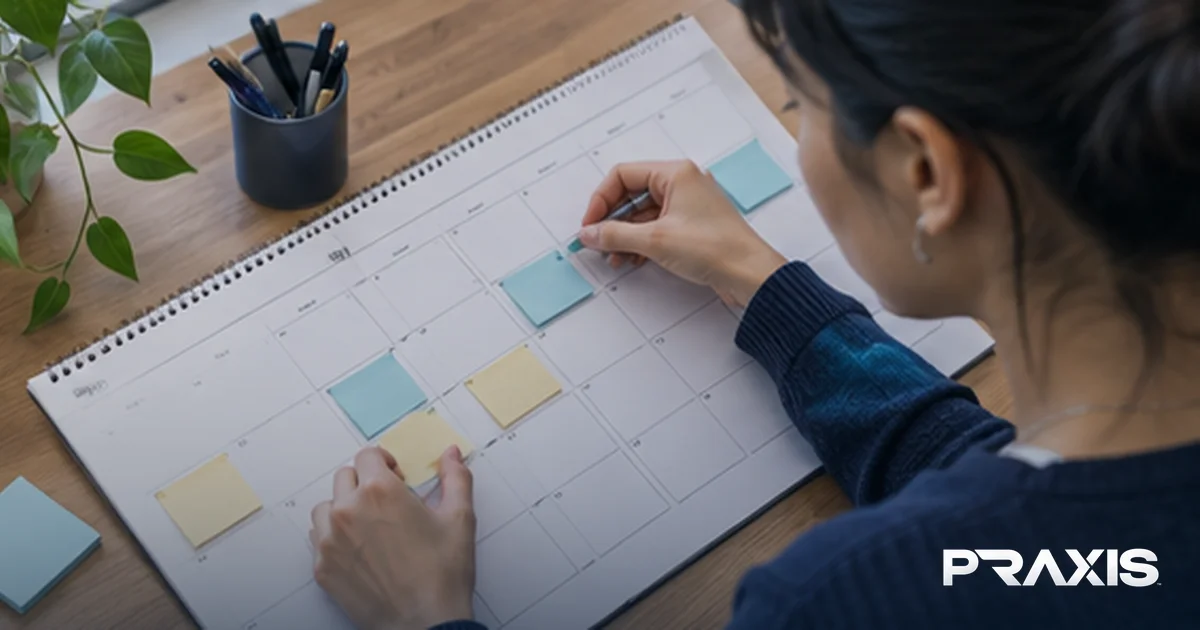
A calendar full of study hours can conceal a week spent rereading material that already feels familiar. Plan backward from a demonstration: what should you be able to explain or decide on Friday that you could not do on Monday?
Establish a starting point
Choose one current objective and attempt a fresh practice decision before opening your notes. Capture what you selected, why and which detail you could not interpret. A weak baseline is useful because it tells you what the next two sessions should address.
Give each block a job
Use one short session to rebuild the concept with an approved reference. Use the next to compare two similar cases where one detail changes the answer. Leave a separate block for a fresh attempt under the conditions you intend to practice. If time is scarce, narrow the objective before removing the follow-up.
Decide what comes next
On Friday, save a short explanation of the decision and the alternative you rejected. If the reasoning transfers, move to the next objective and schedule a later retrieval check. If a specific step still needs a prompt, reserve one targeted session for that step. Record the reason for the schedule change so next week’s plan reflects evidence rather than anxiety.
Give three forty-minute sessions different jobs
Suppose your week has three dependable forty-minute blocks. Choose one objective where a baseline attempt reveals an error you can describe. An operational example is deciding when a routine request needs approval from someone outside the team. On Monday, spend a few minutes answering a new case before opening your notes. Write the rule you used and the detail you overlooked. Use the rest of the block to review the narrow distinction and produce a corrected explanation.
On Wednesday, work two cases that differ in the decisive condition. In one, the request falls within delegated authority. In the other, the same request exceeds a stated limit. Explain both outcomes aloud. If you need a reference, record which part you used. A supported practice session can build understanding. Recording the help keeps you from mistaking a successfully guided attempt for independent retrieval.
On Friday, use an unfamiliar example with different wording and a distractor that makes the wrong answer attractive. Make a decision before consulting your notes, then explain what would change the decision. Save the example, your answer and the correction, if any. You now have three different artifacts: a baseline, a comparison and evidence about a fresh decision. Forty minutes of activity on three days alone would tell you less.
Protect useful practice when the week gets shorter
If Wednesday disappears, preserve Friday's fresh check. Shorten the practice pair or move one case into an available ten-minute block. If the concept is still unclear on Thursday, use Friday as a diagnostic and reschedule the independent check. Recording that change is more informative than marking the week successful because all the study boxes were eventually ticked.
Avoid spending most of your limited time choosing materials. At the end of one block, set aside the next objective reference and the type of fresh case you need. Keep the answer separate. If you consistently choose examples that look familiar, ask a study partner to select a new setting or use a legitimate practice source covering the same objective.
Make next week's choice explicit
If you can explain the decision independently across changed cases, allocate the next substantial block to a different weak objective and schedule a short revisit. If the result improves only after the same hint, build another pair that isolates the missed condition. If you cannot explain the vocabulary at all, return to a focused lesson before spending more time guessing at scenarios.
Record both the result and the limits of what you checked. Success on three examples from one objective says little about untested domains, pacing across a whole exam or your readiness for a particular test date. Check the remaining work against the current issuer outline and your broader practice record. The weekly plan should tell you exactly what deserves your next hour and what evidence would cause you to spend that hour differently.
Budget study time when two objectives compete
Imagine you have ninety minutes left this week. On one objective you answered four familiar questions correctly but could not explain why an alternative was wrong. On another you answered two fresh cases independently and explained the boundary, then missed a third because you misread the requested unit. Raw accuracy might favor the first objective. The evidence about transfer suggests spending more diagnostic time there and treating the unit error as a narrower problem.
One workable allocation is twenty minutes for a fresh baseline on the first objective, thirty for targeted repair, twenty for a changed case later in the week, and twenty for a mixed review that also checks the second objective. Schedule the later case before the week fills up. If the baseline shows a genuine concept gap, change the repair block to focused instruction. If the baseline is sound, release some of that time to another domain. A calendar helps most when you can change it for a stated reason.
Keep a visible distinction between coverage and confidence. Highlight objectives you have encountered, ones you have demonstrated independently and ones whose evidence is stale. A domain with no fresh example should stay visibly untested even if it feels familiar after reading. A narrow missed case need not send you back through the entire domain when you can identify and test the specific reasoning error.
At the week's end, write a short handoff to your future self. Include the objective, the decision you can now make, the detail that still confuses you, your next fresh case and the time you have reserved. Coming back after a busy weekend, you should be able to start with a meaningful practice decision in a few minutes instead of spending the first half of the session reconstructing what you meant to study.
| Fresh check result | Decision about the next study block |
|---|---|
| The learner can choose and explain the action across changed examples. | Move the main block to another weak objective and schedule a shorter delayed revisit of this one. |
| The learner succeeds only after the same hint. | Build a comparison that isolates the missed condition. Record the cue and later check for independent recognition. |
| The learner cannot explain the terms used in the scenario. | Use focused instruction to repair the prerequisite, then return to a fresh example before judging progress on the decision. |
Test your judgment
You have only two study blocks this week. Which part of the plan should survive?
Compare your reasoning
Narrow the objective. Use the first block for a baseline and focused practice, and reserve the second for a changed example. Dropping the follow-up entirely leaves you with a record of effort but little evidence about what to practice next.
